
Choosing A Caterer in New York: The Questions That Matter Most
FOOD & DRINKS · BJÖRN VW EVENTS
Choosing A Caterer in New York: The Questions That Matter Most
By Björn VW · September 2026
Ask ten couples what they remember most about a wedding, and eight of them will mention the food before they mention the flowers. That's not a knock on florists — it's just how it works. Catering is one of the largest line items in a New York wedding budget, and it's also the one guests actually experience in real time, bite by bite, for four or five hours straight. Get it right and nobody notices the logistics. Get it wrong and it's the only thing anyone talks about on the ride home.

New York makes this harder than it needs to be. The city has more catering talent per square mile than almost anywhere in the country, which sounds like an advantage until you're staring down forty vendor websites that all promise "elevated" and "seasonal" and "bespoke." Here's how I actually narrow that list with clients.
Photo by: Joseph Lin Photography
Start With The Venue, Not The Menu
Before you fall in love with a tasting, find out whether your venue has an exclusive caterer or a preferred vendor list. A huge number of NYC spaces — hotel ballrooms, private clubs, some of the more architecturally significant event spaces — require you to use their in-house team or choose from a short, pre-approved roster. If that's the case, your "choosing a caterer" conversation is really a "which of these three teams fits us best" conversation, and that's fine. It just means you should confirm this on your very first venue call, not after you've already booked three tastings with outside companies.
If your venue is a blank-slate space — a loft, a warehouse, a private home, an outdoor site — you have full freedom, and full responsibility. Everything from kitchen build-outs to generator power to fire permits becomes the caterer's job to solve, so their production experience matters as much as their food.

Photo by: Joseph Lin Photography
Figure Out What Kind Of Service You Actually Want
"Catering" covers a wider range than most couples realize going in, and being specific early saves you from touring companies that were never going to be the right fit.
PLATED SERVICES — the most formal option, best suited to timeline-driven receptions and larger guest counts where you want control over pacing.
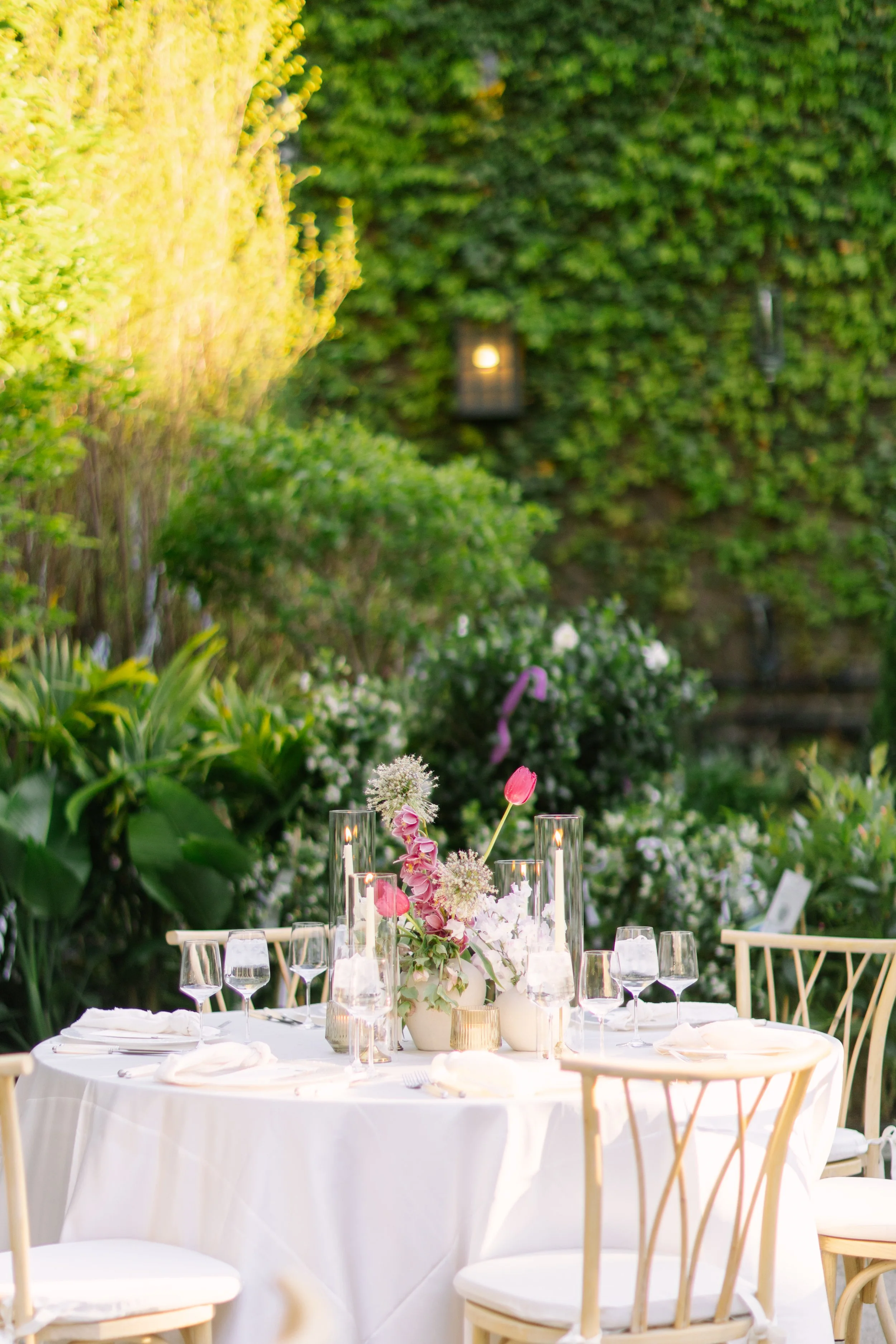
FAMILY STYLE — my favorite for guest experience; it reads as generous and social, but it requires more table space and a caterer who's genuinely practiced at it, not just willing to try it.
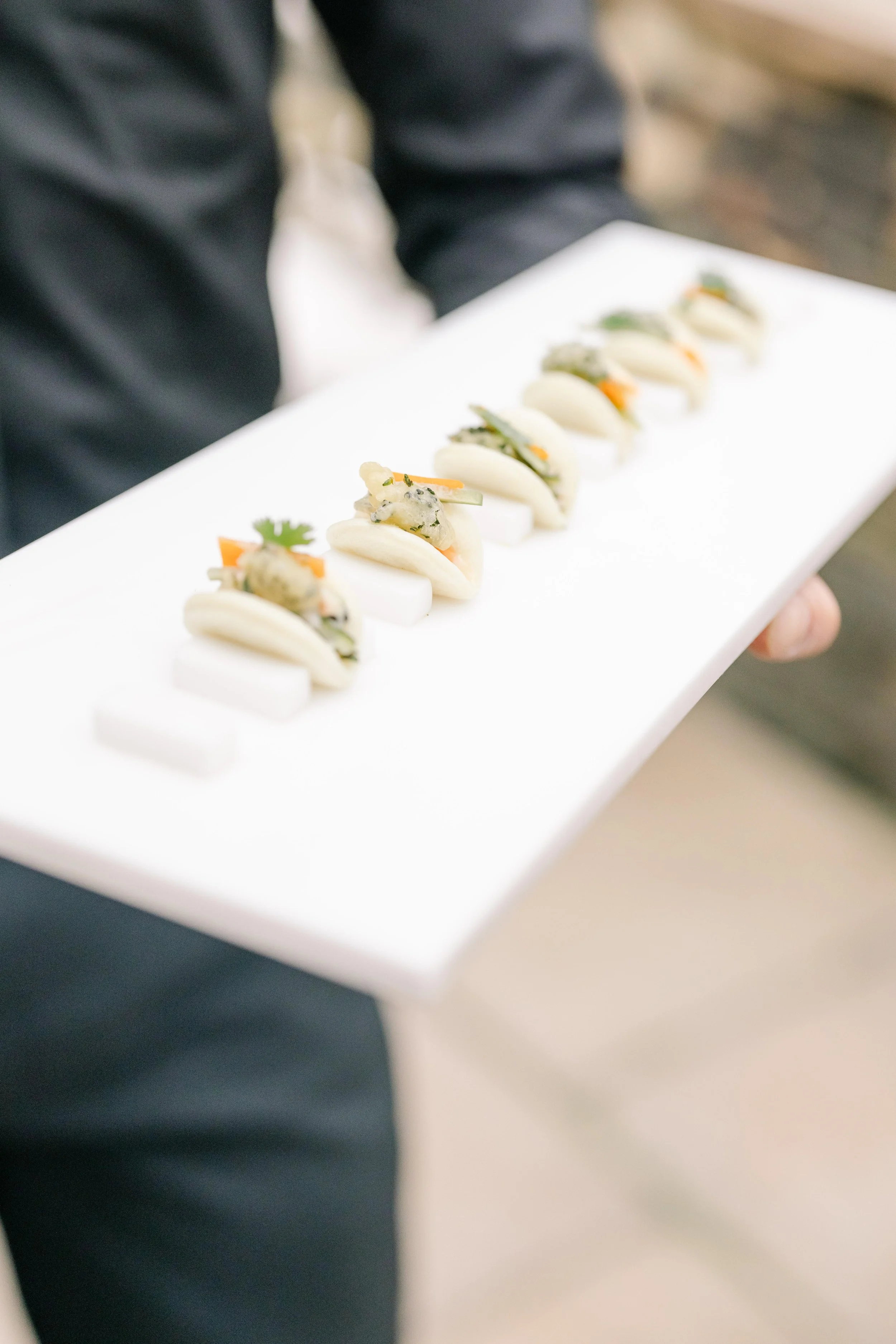
STATIONED & PASSED — cocktail-party energy for the whole reception. Great for a younger crowd or a shorter event; less great if your grandparents were hoping to sit down and eat a full meal.
BUFFET — often assumed to be the "budget" option, which isn't quite true in New York; a well-executed buffet with live-action stations can cost as much as plated, it just spends the money differently.
Decide this before you start touring, because a caterer who's exceptional at composed plated dinners isn't automatically the right choice for a loose, family-style feast, and vice versa.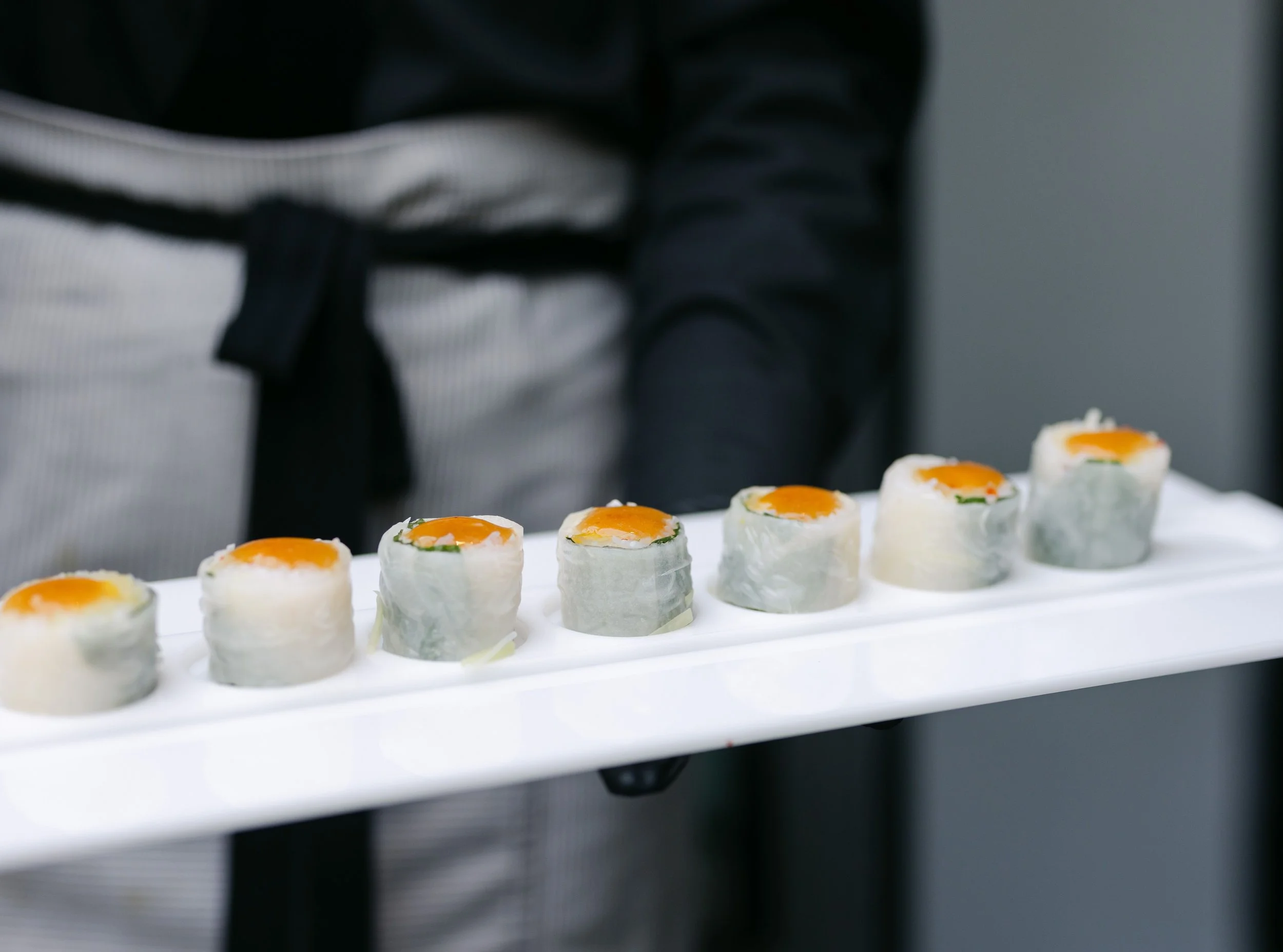
Photo by: LH Photography & Film
The Tasting Is Not Just About Whether The Food Is Good
Almost every caterer at the level you're considering can cook well — that's table stakes, not a differentiator. What you're actually evaluating at a tasting:
Do they ask you questions, or just present a menu? The good ones are trying to understand your guests, not just sell you their greatest hits.
How do they talk about dietary restrictions? If you have guests with allergies or you're serving a kosher or halal contingent, ask specifically how that's handled — separate kitchen prep, dedicated staff, the works — not just whether they "can accommodate."
What's included versus billed separately? China, glassware, linens, cake-cutting fees, staffing ratios, bar service, vendor meals — these are where quotes diverge wildly, and where a lower-looking number can end up costing more once everything's itemized.
Who actually shows up on your wedding day? Ask directly whether the chef who ran your tasting will be on-site, and who the point person is during service. In a city with this much catering volume, some companies run multiple events a weekend with a rotating cast.

Photo by: Joseph Lin Photography
Have An Honest Conversation About Budget, Twice
Once at the start, once after the tasting. New York catering costs run a wide range — you'll see per-person pricing anywhere from the mid $300 to well over $500, before bar, before service charge, before tax — and the gap between those numbers isn't really about food quality. It's about staffing ratios, rental complexity, and how much production the space requires. A caterer who seems expensive in isolation might actually be efficient once you account for what a blank-slate venue would otherwise cost you in rented kitchen equipment and extra crew.
The honest trade-off: the caterers with the most name recognition in New York are often booking twelve to eighteen months out and aren't the most flexible on menu customization, because their systems are built for scale and consistency. Smaller, chef-driven operations tend to be more personal and more willing to build a menu from scratch — but you're also betting more on one or two key people, so ask what happens if your chef gets sick or leaves the company before your date.

Photo by: LH Photography & Film
A Few NYC Caterers Worth Knowing
This isn't an exhaustive list, and the right fit depends entirely on your venue and vision — but these are names that consistently show up doing excellent, well-run work across the market:
Abigail Kirsch — one of the most established off-premise catering operations in the city, with real depth handling large-scale, logistically complex venues.
Marcey Brownstein Catering & Events — consistently praised for personalized service and flexibility, a good option if you want a caterer willing to build a genuinely custom menu.
Creative Food Catering — a New York–based team known for weaving thoughtful, romantic menu design into a genuinely custom wedding experience.
Rhubarb (Events by RHC) — international sensibility and strong experience with modern, non-traditional dining formats if you're leaning away from a conventional plated dinner.
Thomas Preti Catering — a longtime, well-regarded New York name known for polished, dependable execution across a wide range of venues.
Vet all of these the same way you'd vet anyone else: tasting, references, a clear-eyed look at the contract.
Photo by: Joseph Lin Photography
FAQ’S
-
For a Saturday wedding at a popular NYC or Hudson Valley venue, 10–14 months out is typical. In-demand teams book further ahead than that.
-
Not always — but it usually simplifies logistics, since you're not coordinating kitchen access, load-in times, or rental drop-offs between two separate vendors.
-
Check your contract first — many NYC catering companies build a service charge or gratuity into the total, and tipping on top of that is a personal choice, not an obligation.
-
One or two, seriously considered, beats five done quickly. Tastings are time-consuming and, at this level, usually not free.
There's no universal "best" caterer in New York — there's the right one for your venue, your guest count, and the kind of evening you're actually trying to throw. The couples who end up happiest are the ones who lock in their service style early, ask direct questions at the tasting instead of polite ones, and read the contract as carefully as they read the menu.
If you'd rather not run that process alone, it's a large part of what we do. Björn VW Events works with clients across NYC, the Tri-State area, and the Hudson Valley to vet caterers, manage tastings, and build a catering plan that actually fits the wedding — not just the venue's preferred list. Reach out through CONTACT FORM and we'll walk you through it.Read The Full Journal
BJÖRN VW EVENTS · NEW YORK CITY
Let's plan your
perfect day together
From intimate dinners to grand ballroom affairs, we bring decades of New York experience to every celebration. Our vendor network, creative vision, and hands-on approach means you can focus on the moments that matter.
The Upper East Side isn't trying to impress you. That's exactly why it works for a certain kind of couple — the ones who want marble staircases and gilded ceilings without a single exposed brick wall in sight. If your mood board looks more like a 1920s townhouse than a Brooklyn loft, this is your neighborhood.